University professor and team discover 94-million-year-old fossil of ancient sea-dwelling creature
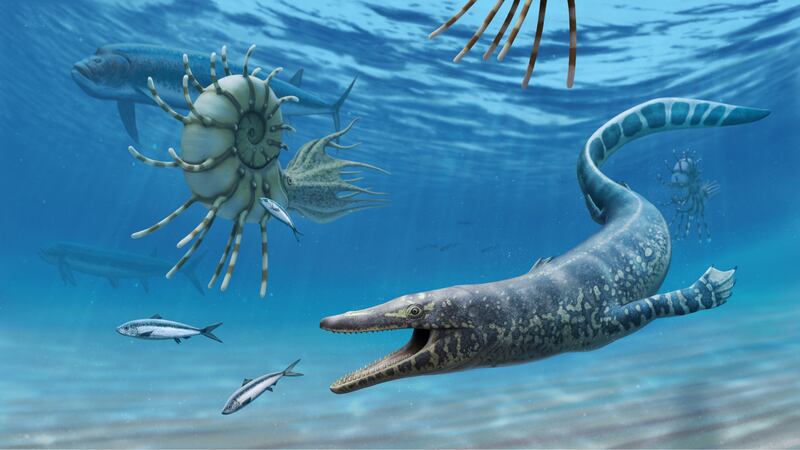
(Gray News) – A university professor and his team discovered a 94-million-year old fossil in Utah that could help provide new evolutionary information for a creature that swam the oceans during the time of the dinosaurs.
Dr. Barry Albright, who teaches at the University of North Florida (UNF), and his research team led by the Bureau of Land Management (BLM) found the mosasaur fossil in the badlands of the National Park Service Glen Canyon National Recreation Area in southern Utah.
The species was given the name Sarabosaurus dahli, or Dahl’s reptile of the mirage. The name comes from volunteer Steve Dahl and the mirages that are seen in the area during the summer.
According to the UNF, mosasaurs are reptiles that swam the seas millions of years ago during the age of the dinosaurs.
The recent discovery was made after a trained volunteer who worked under Albright found skull fragments and vertebrae of what was determined to be a mosasaur in 2012.
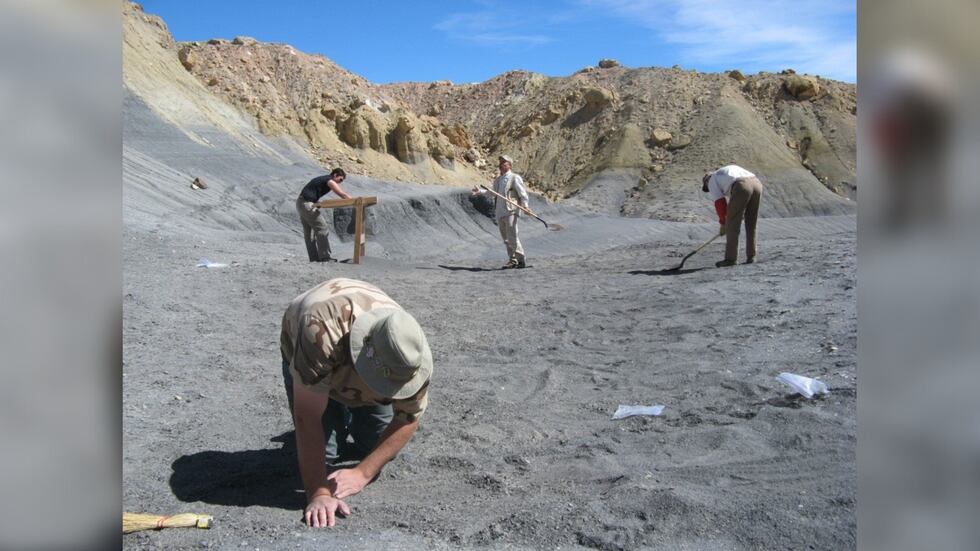
Richardson was searching for fossils in the middle of North America, which was once covered by a vast seaway, known as the Western Interior Seaway, between 84 and 85 million years ago. Researchers said this seaway covered most of what is now Colorado, Utah, Wyoming, Texas and parts of Kansas.
A team formed between the BLM and National Park Service found almost half of the exact specimen over the course of two following field seasons, which was enough to determine its identity.
Experts said mosasaur fossils found in rocks older than around 90 million years are extremely rare, so the discovery of one that dates past that time is “a significant discovery.”
Mosasaurs were once small creatures, measuring only about three feet long, but they later evolved into gigantic lizard-like predators that owned the seas during their time period.
The ancestors of the sea-dwelling mosasaurs lived on the land and were similar to the Komodo Dragons that exist today. Eventually, they evolved bodies, fins, and tails that helped them adapt to life in the ocean.
According to the research team, the recent discovery has provided insight on how the species would eventually evolve a new way to circulate blood into its brain.
The research from the fossil’s discovery was published in Cretaceous Research on June 14.
Copyright 2023 Gray Media Group, Inc. All rights reserved.
![[INSERT CAPTION HERE]](https://gray-wcsc-prod.gtv-cdn.com/resizer/v2/QBVKVKUA2NAEZLEXTNZE2AQ4C4.jpg?auth=74d0e07d724f82916b8f8822bf62ce7c9fbdf27b6364d9612426ee769571ad6b&width=800&height=450&smart=true)