36 charged in multi-state drug and money laundering investigation reaching Midlands
Task force probe included largest fentanyl seizure in South Carolina history
COLUMBIA, S.C. (WIS) - A multi-state Homeland Security investigation has led to charges against 36 people in a drug and money laundering ring that spanned from Mexico to the Midlands, authorities announced Tuesday.
Dozens of local agencies took part in the news conference. U.S. Attorney Bryan Stirling credited South Carolina law enforcement for the task force investigation, which included the largest fentanyl seizure in state history.
“This indictment would not have been possible if not for the work of the men and women that stand behind me and the folks they work with,” Stirling said.
Cartel operated in state since at least 2011
Authorities said a Mexico-based cartel that has operated in South Carolina since at least 2011 is behind the distribution network.
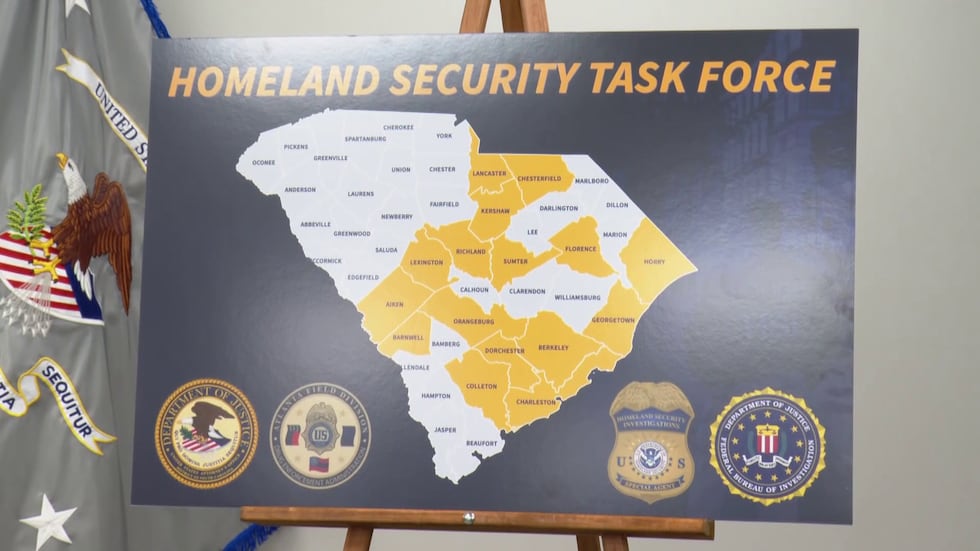
The ring distributed drugs and firearms in the Midlands, Lowcountry, Pee Dee and Grand Strand regions, according to authorities.
Seizures include fentanyl, cocaine, firearms and cash
During the investigation, the Drug Enforcement Administration seized:
- More than 300 kilograms of fentanyl
- 70 kilograms of cocaine
- 43 firearms
- Nearly $3 million in cash
Authorities also seized more than a dozen luxury vehicles and jewelry.
DEA warns about pressed pills
Michael Tooley, assistant special agent in charge for the DEA in South Carolina, used the arrests to warn communities.
“Powdered fentanyl and methamphetamine are commonly pressed into pills and made to resemble legitimate pharmaceutical drugs such as oxycodone, Adderall, or Xanax. One pill can kill and currently, 29% of all pills tested by DEA contain a lethal dose of fentanyl. Do not take a pill that does not come from a licensed doctor or a pharmacist, a parent or guardian, and has your name on it,” Tooley said.
Six defendants plead guilty
Six defendants have pleaded guilty.
Agents also found that some members operated the ring from within federal and state prisons.
“These people are arrested and sent to prison and continue their criminal ways from behind bars. Think how many lives that those people have affected from behind prison walls. There is a solution to that and the FCC will vote on it next week,” Stirling said.
The Federal Communications Commission is scheduled to vote Nov. 19. If the commission approves, states could legally block cell phone signals inside prisons and jails.
Feel more informed, prepared, and connected with WIS. For more free content like this, subscribe to our email newsletter, and download our apps. Have feedback that can help us improve? Click here.
Copyright 2026 WIS. All rights reserved.