Former N. Charleston cop recalls nation’s ‘most prolific’ serial killer
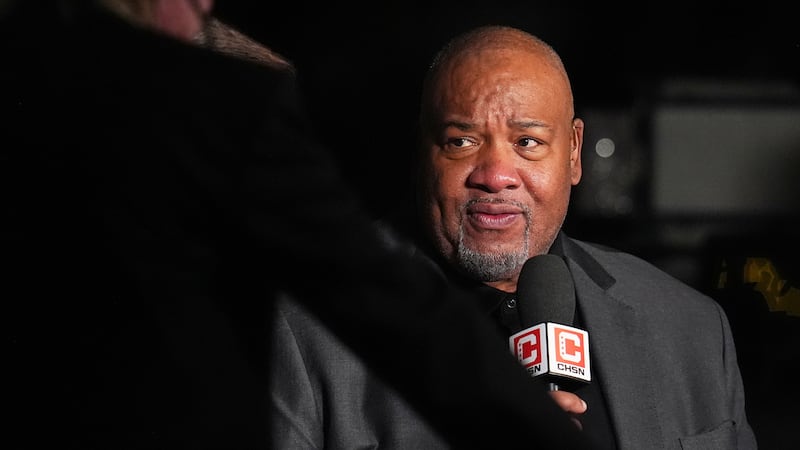
CHARLESTON, S.C. (WCSC) - A former North Charleston deputy chief says a sit-down interview with serial killer Samuel Little, who is now confirmed to have killed a Lowcountry woman, was the “closest to the devil” he has ever been.
Kenneth Hagge, at the time a major commander of investigations, traveled to Los Angeles in 2019, where he says the two sat knee-to-knee in a seven-hour discussion.
“We were so close; it was such a small room. I’d be trying to show him a picture and he touched my leg, like he’d like to talk about something else. He didn’t want to interrupt, but he would go from murdering a girl to talking about Ohio,” Hagge says. “Sam was very controlling through the whole process. I had to wear a certain color shirt. I had to take a letter that if he confessed to my homicide, we would not seek the death penalty. He only wanted to talk to one investigator at a time. He had stipulations to everything.”
Little confessed to the strangulation murder of 93 people across the United States between 1970 and 2005, 50 of them verified. He was labeled the most prolific serial killer in the nation’s history and died in 2020.
“If you talked to him in the grocery store, you’d love this guy. But you have to have that salesman attitude to be able to lure 94 intelligent women somewhere,” Hagge says.
The Federal Bureau of Investigations told Hagge in 2017 that Little had talked about killing someone in the North Charleston area.
Little, as of Oct. 2, is presumed by deputies to be the killer of a Berkeley County woman, identified as Leola Etta Bryant. She was 51 when she died.
Bryant was last seen at the Midway Bar on Reynolds Avenue, the same location where Little stated he met the victim before killing her. Bryant was reported missing to North Charleston Police.
Her remains were found on Sawgrass Avenue in Goose Creek in 1977. They were collected and examined through the Berkeley County coroner, the Medical University of South Carolina, the University of North Texas for Human Identification Forensic Anthropology and the Palm Beach Sheriff’s Office.
Hagge says he did not know about Bryant’s case when he was in the process of interviewing Little. Shortly after, he started communicating with the Berkeley County Sheriff’s Office.
Earlier this year, Berkeley County Cold Case detectives John Plitsch and Darrell Lewis received additional information from the FBI Investigative Genetic Genealogy Team of someone with potential family ties to the victim.
Little was known for drawing his victim’s faces, including the one used to identify Bryant.
“It was little details. He studied their faces, he studied them and then a lot of the victims, he knew their names,” Hagge says. “He called all of his victims’ babies.”
Hagge says his meeting with Little confirmed his belief that he was intent on the crime from the beginning.
“In my humble opinion, he was born,” Hagge says. “It was for him, it was about the control period. He didn’t care how he got them, he didn’t care what they looked like. How nonchalant he talked about it was hard to get over. He could lure you into a conversation, and you felt comfortable, then he would say something like that and you would get back to seeing that this isn’t a normal person.”
Hagge says DNA technology and testing has come a long way in forwarding and closing missing persons investigations like Bryant’s.
“I’m proud that Berkeley County Sheriff’s Office was able to put this together and kind od put it to bed. As an investigator, you always think about those cases that are solved,” Hagge says.
Hagge retired in August 2023 after 35 years with the North Charleston Police Department.
Copyright 2024 WCSC. All rights reserved.