Finding a Killer: The Murder of Crickette Surell
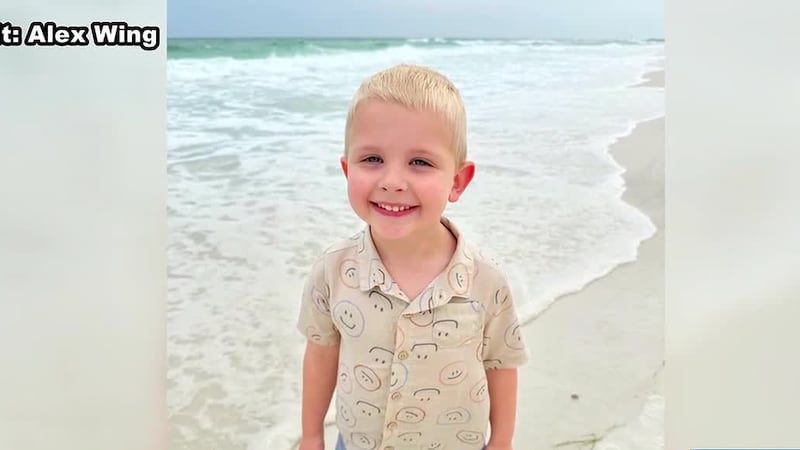
SUMMERVILLE, S.C. (WCSC) — Thirty-six years after 13-year-old Crystal “Crickette” Surell disappeared on her way to school in Ladson and was found brutally murdered, her sister is still fighting to keep her memory, and this case, from fading.
The man convicted of her murder, Bryan Lamb, is once again asking for parole after serving 20 years in prison.
Nov. 7, 1990
36 years after her sister went missing from Ladson, Deanna Cisneros sits inside her family home. Now, she acts as one of the only voices left for the Surell family.
“It’s hard. That’s all I can say, this is really hard,” Cisneros said.
Crystal Surell, also known as Crickette, was only 13 years old and heading to Oakbrook Middle School on Nov. 7, 1990.
But, she never made it to class.
Police searched into the early morning hours and walked through paths in the tangled wooded area behind the Oakmont subdivision. They were looking for any sign of Crickette.
“She missed the bus and she decided she was going to walk that morning. My dad had offered her a ride that morning and she declined it. She declined it because, of course, she didn’t want to tell my parents that she was suspended off the bus for a couple days,” Cisneros said.
As night fell, law enforcement and search parties combed the woods looking for any sign, any tip or hint that might lead them to Crickette as her family pleaded and prayed that she simply ran away.
“We just need her to call us. We’re not mad. We’re just scared. Anybody that knows out there where Crickette might be, we’d appreciate all your help,” David Surell, Crickette’s father, said in 1990.
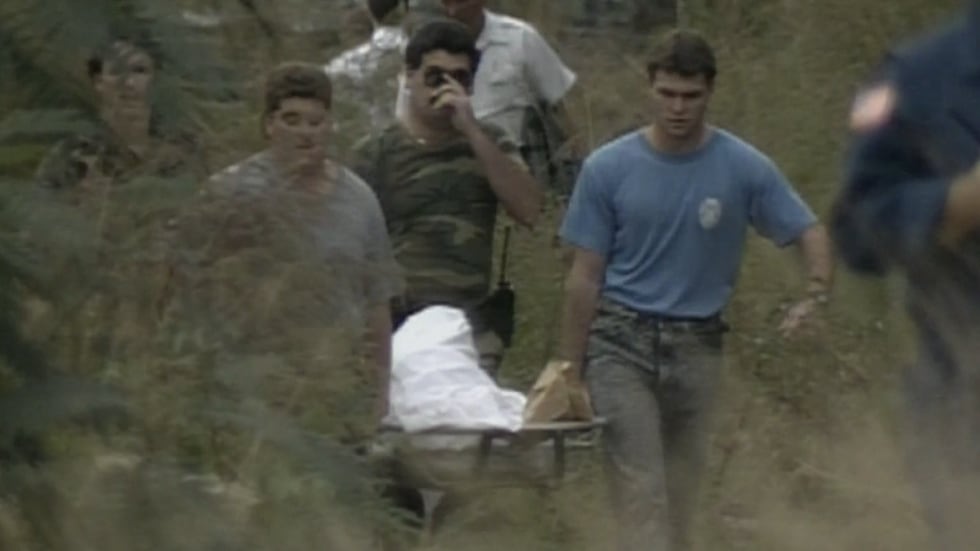
The next morning, police found Crickette half nude, underwear stuffed in her mouth and stabbed four times in her neck. Beside her body, a pentagram, which is widely considered to be a satanic symbol, was scratched in the dirt.
“I hate to share this with the world, but he wanted to have sex with her. She was only 13; she didn’t want to have anything to do with this boy,” Cisneros said. “He’d been looking at her prior, and I guess he just didn’t like ‘no.’”
“You’ve all got to pay for it. I want you to look at my face, you will all pay for it,” David Surell, Crickette’s father, said in 1990.
13 years without any answers
Crickette’s brutal murder rocked the entire Lowcountry, with 700 people at her funeral. But the crowds eventually moved on, which left a massive burden of grief haunting the Surell family.
“It was awful. I mean, it was like yesterday for my parents over and over again,” Cisneros said. “I’ve seen both of them just wither away with it.”
And years passed with Crickette’s killer still roaming free.
Detectives had suspects in mind, but simply not enough evidence to arrest any specific individual.
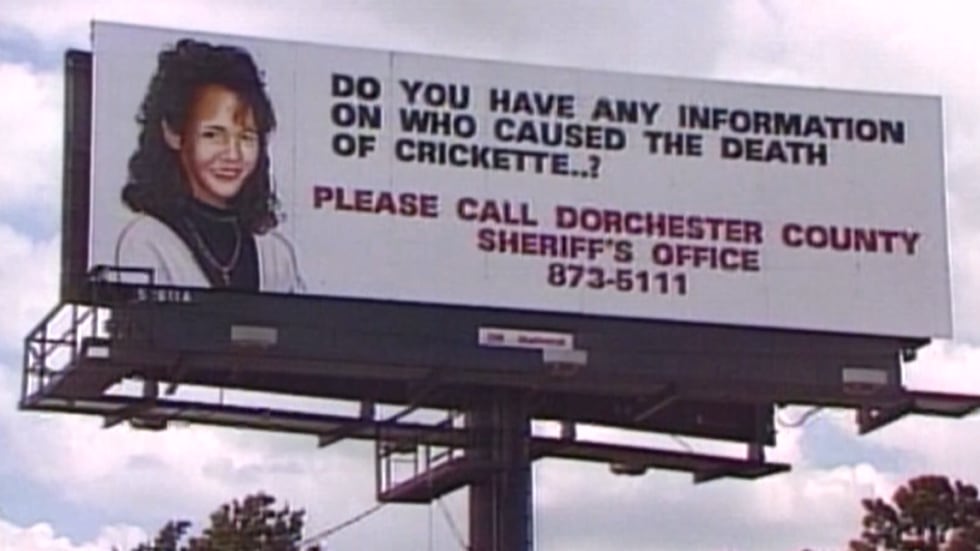
“I don’t like my home at night. I usually go off in the evening because I can’t stay here. It’s too hard,” Kathy Surell, Crickette’s mother, said a year after Crickette’s death.
“I know pretty well who did it. I want you to know to take advantage of the freedom right now because it won’t be long,” David Surell said in 1990.
If the family couldn’t get the killer, they looked for justice anywhere they could. The Surells sued Dorchester County School District Two, which didn’t allow Crickette to ride the bus.
Crickette’s parents claimed they were never informed about the disciplinary action against their daughter, and if they had known, Crickette would not have been walking in the woods that day.
The Surrells asked for $350,000 in damages and accused the school district of negligence. That lawsuit would ultimately be dismissed as the investigation dragged on for more years to come.
“It was awful. I mean, it was like yesterday for my parents over and over again; it really was,” Cisneros said. “It was a nightmare for them. I’ve seen both of them just wither away with it. I just kind of wish that he wouldn’t have done that that day.”
More time passed with no new answers and no new leads… a case as cold as they come. The case followed sheriff after sheriff, including former Dorchester County Sheriff Ray Nash.
“This case went on for a long time. It haunted three different sheriffs; it traumatized the community in a major way. There was just this fear that was permeating. Here we had a young girl, a brutal murder, and no suspect in custody,” Nash said.
“So you could imagine being a parent of a child in this area during that time, everybody was just scared to death,” he said.
Connecting the dots
13 years later, an answer finally came.
Bryan Lamb was charged with Crickette’s murder. He was only 14 years old at the time of the crime. Another man, Eric Castro, was charged with withholding key information in the murder.
A year later, the trial began.
The majority of the state’s case relied on jail house informants, Crickette’s watch found in Lamb’s tent near the crime scene, blanket fibers, graffiti, and a potential murder weapon.
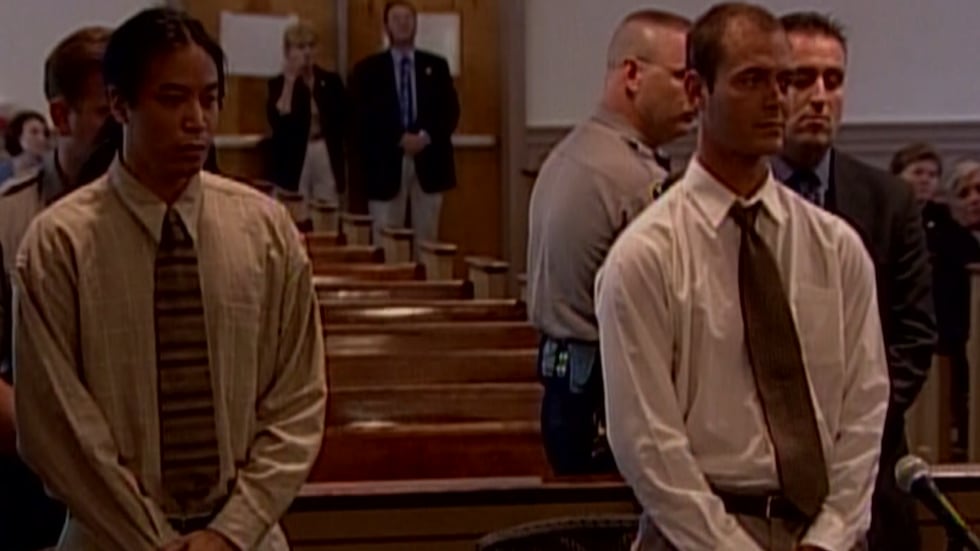
Technically, investigators never found the weapon used to stab Crickette repeatedly in the neck, but years later, a probation search uncovered a critical piece of evidence.
“There was an associate of Bryan Lamb, a friend of his that said he had this folding pocket knife that he called the pig sticker. The kid actually drew a picture of this knife for investigators,” Nash said. “He (Lamb) was on probation for some other totally unrelated crime, the probation agent did a home search and found a knife that matched that description; it was almost identical to the drawing that this kid had made for us.”
“We don’t know with certainty that that was the knife that was used in the crime itself, but we were able to have it looked at and analyzed forensically. It is that type of knife, that type of blade, that would have resulted in the wound pattern that we found on Crickette’s body,” he said.
Remember the pentagram found next to Crickette’s body? Early in the investigation, a nearby abandoned Summerville home in the woods was discovered with similar satanic graffiti covering the walls, candles and pentagrams.
“What was interesting was that on the graffiti that was on the wall, mostly done with spray paint, there were two terms. One said ‘I killed Dorchester girl,’ and also the word ‘Satan’ had been spray-painted on the wall, but it was misspelled. It was ‘SATIN,’ like we would spell satin.”
Prosecutors were facing a weak case: no murder weapon, questionable claims of satanic ties, and unreliable inmate testimony. It wasn’t enough to win until Lamb took a handwriting test.
“So, he wrote out, ‘I killed Dorchester girl’ under the instruction of the handwriting analyst,” Nash said. “Then he wrote out the word Satan, but he spelled it satin, just like it was inside that abandoned home, just a short distance away from Crickette Surrel’s body was found.”
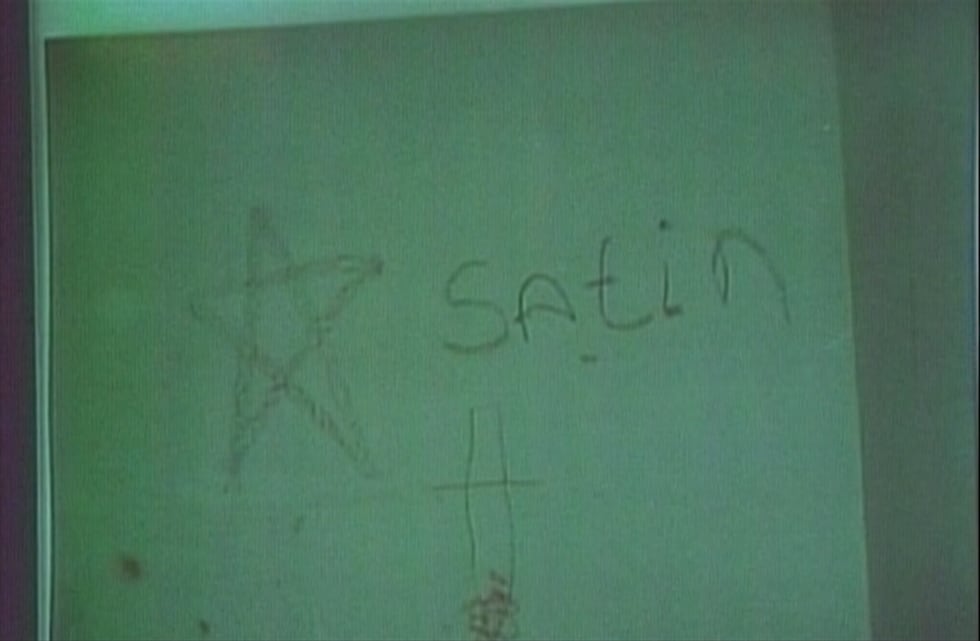
S-A-T-I-N. Not only did the handwriting match, but the same spelling error from 1990 reappeared in the handwriting sample more than a decade later.
“That was like this is the final piece of the puzzle that brings all of this together,” Nash said.
But the state still had to convince the jury that Lamb killed Crickette beyond a reasonable doubt, which gave the defense an opportunity to place that doubt in 12 jurors’ minds.
Lamb’s attorneys argued the jailhouse informants were not credible and there was no DNA or blood directly connecting Lamb to the crime.
Just a few days later, on June 16, 2004, Lamb was found guilty of murdering Crickette Surell.
“What he did to Crickette, this is really not a normal thing and we’ve known that all these years. But justice was served today,” David Surell said after Lamb was convicted.
“There’s certain cases that just pull at your heartstrings, this was one of those cases. To know that it happened here, it was a terrible, terrible crime, but in the end justice prevailed,” Nash said.
Lingering heartbreak and potential freedom for Lamb
Even with Lamb behind bars, the heartbreak of losing their 13-year-old daughter never left the Surells.
“But it was every day in this house, you got to understand, it was every day,” Cisneros said. “They lived trying to live without her and my mom, she drank so much. And my dad, he watched her drink. It was horrible, and then he took his life.”
With both of Deanna Cisneros’ parents no longer alive to speak for Crickette, the burden is placed on her to advocate for her sister’s killer to remain behind bars.
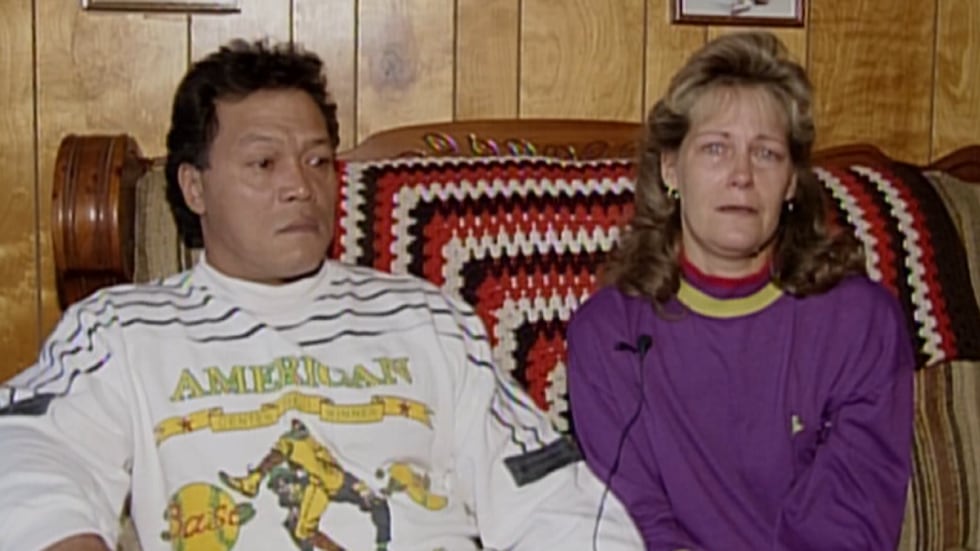
“I know he wants it so bad to get out, but I can’t bring back any of them; I can’t bring byears’ack my mom, my dad or my sister,” she said.
With Bryan Lamb serving a life sentence behind bars and Castro sentenced to 10 years’ time served, the Surells thought the system had finally delivered justice.
But a life sentence at the time of the crime didn’t really guarantee a killer would stay off the street forever.
“This is a unique case, too, insofar as the age of Mr. Lamb. The age of him when he committed this offense, being 14,” Attorney Joseph Cannarella said.
Bryan Lamb was charged in 2004 before life without parole was a sentencing option, which means that, after serving 20 years of his sentence, Lamb would have the opportunity to go free.
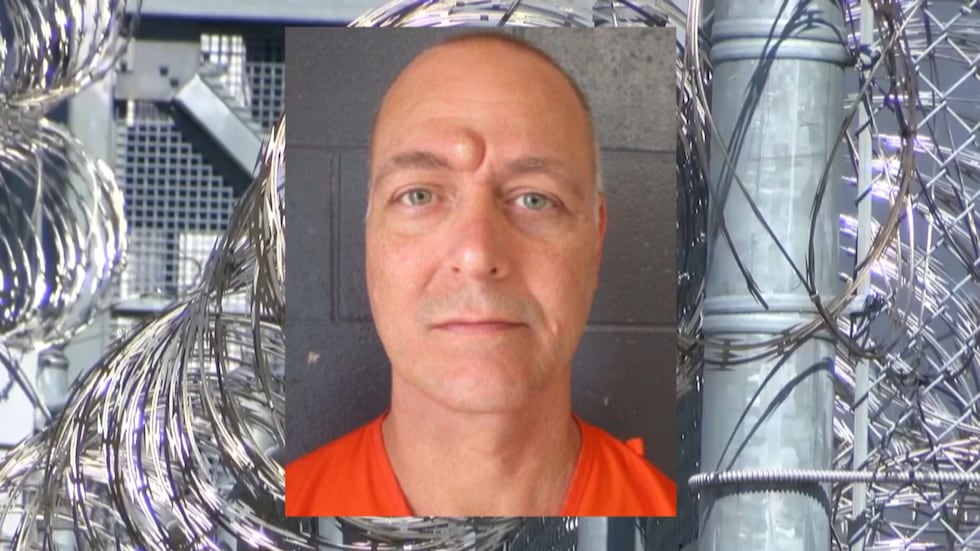
“You have to understand that the law is he can be paroled. That is the law, and there’s no ifs, ands, or buts about it. But the question becomes, is he, is all the information that’s put before the board enough to lead them to believe that he can go out into the community and not become a risk?” Cannarella said.
Lamb was denied parole in 2024 but soon had a second chance to argue again for his freedom on April 22.
“I’m pretty scared; just scared for my children cause they are around the same age as Crickette was when she was murdered,” Cisneros said. “The thought of him getting out and me having to live in the same state as him, I don’t know if I can do it.”
The board will consider the circumstances surrounding the crime.
Dr. Bill Burke, a Forensic Sexologist, said a key factor is how old Lamb was at the time, which may be a significant mitigating factor.
“Well, at 14, you’re starting to get a really large dose of testosterone in your body that will reach its peak in three or four years. Your prefrontal cortex, your brain, is not developed for males until 25 or older. This is judgment, decision making and impulse control,” Burke said.
Two years ago, Lamb went before the parole board for the first time. All of those same factors were considered and rejected.
“Can this individual go back into the community as a rehabilitated individual and conform to societal norms? And if they place that individual into the community on parole, is that individual going to be a further risk to the community? That’s a big thing. That’s what the board’s looking at,” Cannarella said.
It was the first time the Cisneros had to relive the trauma of her sister’s deaths in order to keep Lamb behind bars. Now, she will have to face her sister’s killer again.
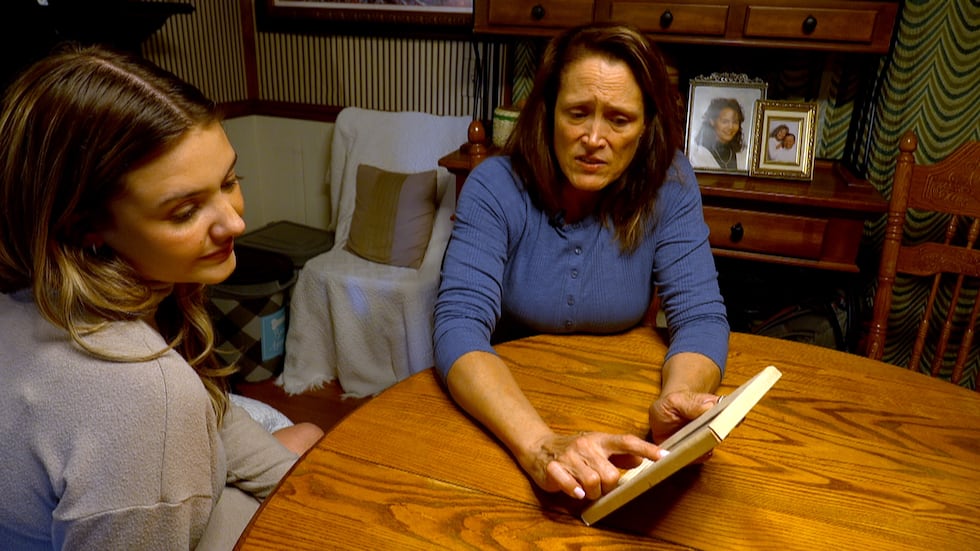
“He just said apparently he’s a changed man, that he’s educated himself but that doesn’t do anything for me,” Cismeros said. “You can go to school all you want and be the smartest person in the world, but that doesn’t take the monster out of the monster.”
“It’s not that I’m opposed to a person being paroled if I feel like they made a significant change,” Burke said. “I believe in the justice system. So, I mean, he’s got an avenue to try and I think he deserves to state his case.”
“This is one of the few cases in my career, which has almost hit 50 years now, that I have actively opposed parole,” Nash said. “The brutality of the murder, the fact that he was free for those 13 years after the fact, was not cooperative with law enforcement and just the brutality of the case itself and the trauma that expanded beyond the victim.”
Even if Lamb’s parole is rejected again, he will be back in front of the parole board every two years for as long as he lives.
“There’s nothing anybody can say or do to change my mind that he needs to stay where he’s at and not be walking around the streets. I feel safer at night,” Cismeros said. “I don’t want him out. I’m having a hard time forgiving, okay? I’m still not there. I don’t know how; I don’t know how to forgive him.”
Lamb is scheduled to be before South Carolina’s Department of Probation, Parole & Pardon Services on April 22 in Columbia.
Copyright 2026 WCSC. All rights reserved.